The enterprise shift is no longer optional
Most enterprises today say they are "using AI." Very few are truly AI-first enterprises. There's a critical difference.
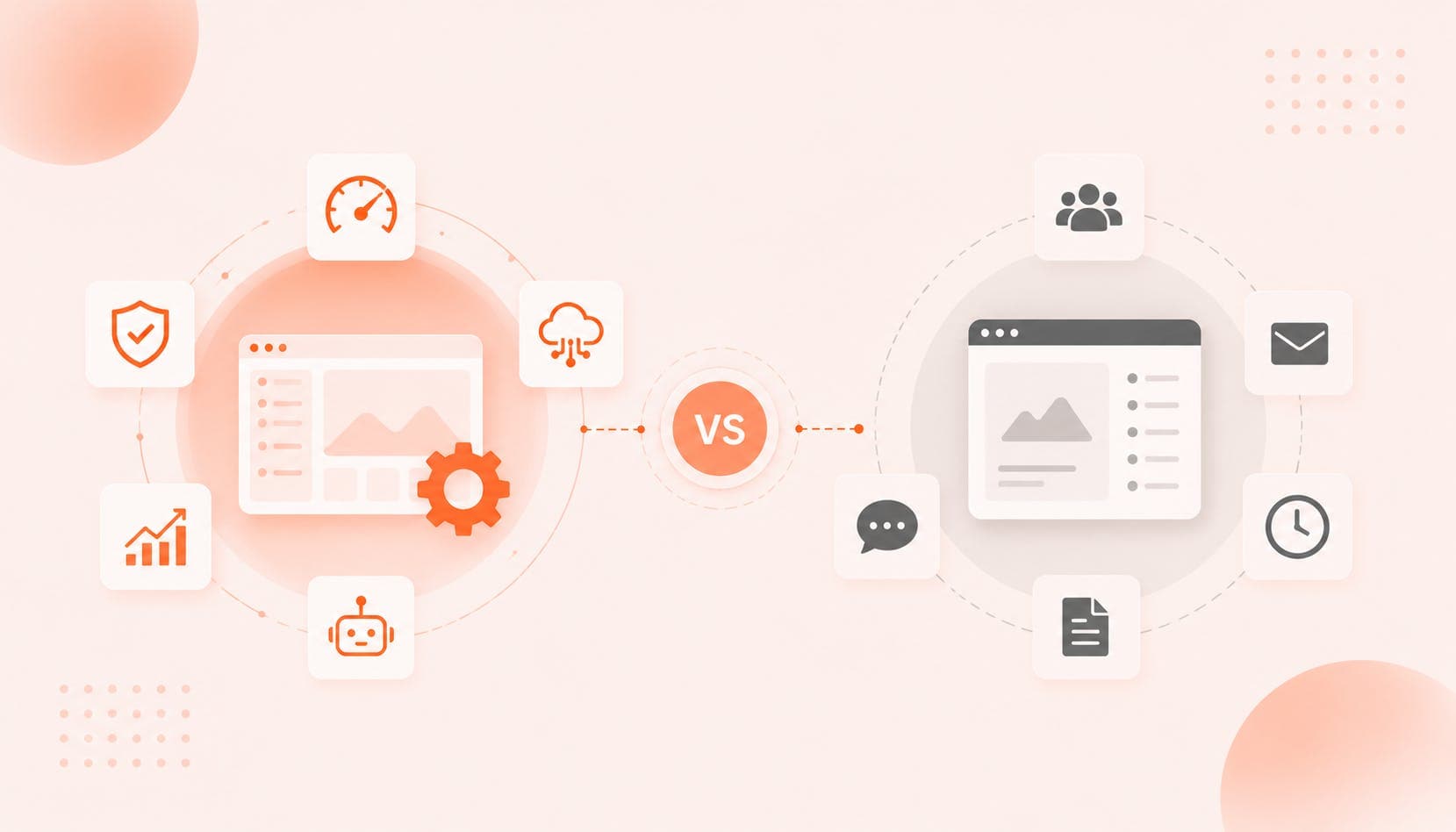
Traditional organizations add AI as a layer - chatbots, dashboards, automation pilots - while their core operating model remains unchanged. Decision-making is still slow. Data is still fragmented. Teams still react instead of predict.
This mirrors what many organizations experienced during earlier digital transformation waves, where technology was adopted without rethinking execution models. It's an issue we frequently see when companies modernize without evolving their enterprise operating foundations.
AI-first companies operate differently at a structural level. And that is precisely why AI-first enterprises consistently outperform traditional enterprises in speed, efficiency, and resilience.
What is an AI-first enterprise (really)?
An AI-first enterprise is an organization where artificial intelligence is embedded into decision-making, operations, product delivery, customer engagement, and strategic planning - not bolted on after the fact.
In an AI-first business model, AI influences how work gets done, not just what tools teams use. This is a structural change, not a technology purchase.
Why AI-first enterprises structurally outperform others
AI-first companies don't move faster because they "use better tools." They move faster because their operating model is built around intelligence and automation.
Decisions move at machine speed
In traditional enterprises, decisions wait for reports, meetings, and approvals. In AI-driven enterprises, AI systems continuously analyze data, flag risks, recommend actions, and automate responses, reducing dependency on manual coordination. This is especially visible in enterprise environments that adopt AI automation at scale.
Operations are designed for automation at scale
AI-first enterprises design workflows assuming continuous optimization, embedded intelligence, and minimal human handoffs. This operating philosophy aligns closely with how modern enterprises rethink delivery, infrastructure, and reliability - similar to principles applied in AI-driven DevOps and platform operations.
How AI-first companies operate differently
AI-first enterprises share consistent operational patterns across industries. Data flows freely across systems rather than being trapped in silos. AI models sit inside workflows rather than beside them. Automation replaces coordination overhead. Governance is designed to enable speed, not create friction. And leaders trust AI-augmented decisions rather than second-guessing them at every step.
For a broader picture of how this plays out in practice, Google Cloud maintains an ongoing catalog of enterprise AI use cases that spans IT, operations, and customer experience across industries.
AI-first enterprise vs traditional enterprise
| Area | Traditional Enterprise | AI-First Enterprise |
|---|
| Operating Model | Human-centric | AI-augmented |
| Decision Making | Historical and manual | Predictive and automated |
| Speed | Process-limited | Intelligence-driven |
| Cost Structure | Labor-heavy | Automation-optimized |
| Risk Management | Reactive | Proactive |
| Scalability | Linear | Exponential |
This widening gap is why many organizations reassess long-term execution models - including how they structure internal teams versus external partners - a challenge explored in depth when evaluating modern CTO service models for enterprise delivery.
The AI maturity model for enterprises
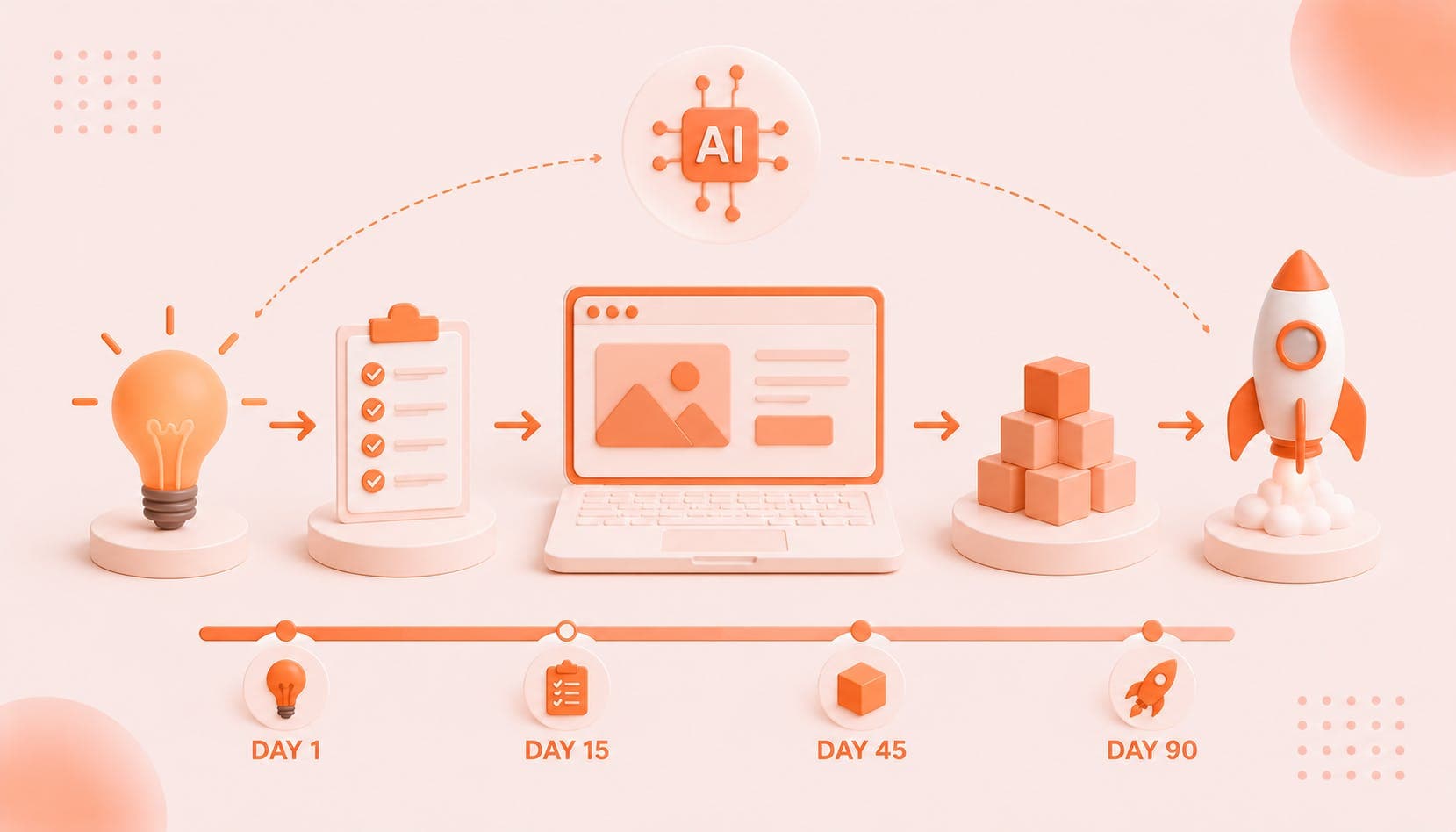
Becoming an AI-first enterprise is not a single leap - it's a progression through four stages: AI experimentation, AI adoption in specific functions, AI operating model, and finally AI-native enterprise.
Most enterprises remain stuck in the early stages due to fragmented ownership and unclear accountability - issues that often surface during broader digital transformation initiatives. The organizations that break through are the ones that treat the maturity progression as an operating question, not a technology question.
Why delaying AI-first transformation is risky
The biggest risk is not "getting AI wrong." It's moving too slowly.
Enterprises that delay face rising operational costs, slower decision cycles, talent attrition, and eventual competitive irrelevance. Meanwhile, AI-powered enterprises compound advantages through learning, automation, and speed. The gap widens month over month, not year over year.
This pattern is already visible across enterprise IT and operations transformations documented in large-scale implementations across the industry.
AI-first mindset for enterprise leadership
Technology alone does not create AI-first companies. Leadership does.
Leaders in AI-first enterprises think differently. They treat AI as infrastructure, not software. They design organizations assuming AI participation from the start. They prioritize decision velocity over perfection. And they shift from managing tasks to managing systems.
This mindset mirrors how leading enterprises rethink governance, execution, and accountability during major transformation programs. The leaders who succeed with AI transformation are the ones who stop thinking about AI as a project to deliver and start thinking about it as a capability to operate.
Responsible AI is a competitive advantage
AI-first does not mean reckless. The most successful AI-first enterprises build transparent AI governance, human-in-the-loop controls, and ethical and compliant AI systems.
Responsible AI increases adoption, trust, and long-term scalability - especially in regulated enterprise environments. The organizations that skip this step tend to see their AI programs stall at the pilot stage because internal stakeholders can't validate the systems well enough to expand their use.
How to build an AI-first organization
A practical AI-first enterprise strategy framework rests on five foundations: a unified enterprise data foundation, AI embedded into core workflows, scalable enterprise AI infrastructure, strong AI governance, and continuous learning and optimization.
This approach aligns closely with how high-performing organizations rethink enterprise software engineering, platforms, and delivery systems. The technical foundation and the operating model have to be built together - one without the other tends to produce either impressive prototypes that never reach production, or well-governed processes with nothing intelligent running inside them.
Final takeaway: AI-first is the new enterprise baseline
The future belongs to AI-first enterprises, not AI-assisted ones. Organizations that treat AI as a side project will struggle. Those that embed AI into their operating model will move faster, decide better, and outperform competitors.
The question for enterprise leaders is no longer "Should we adopt AI?" It's "How fast can we become AI-first?"